The False Self-Employment Risk in Freelancer Management
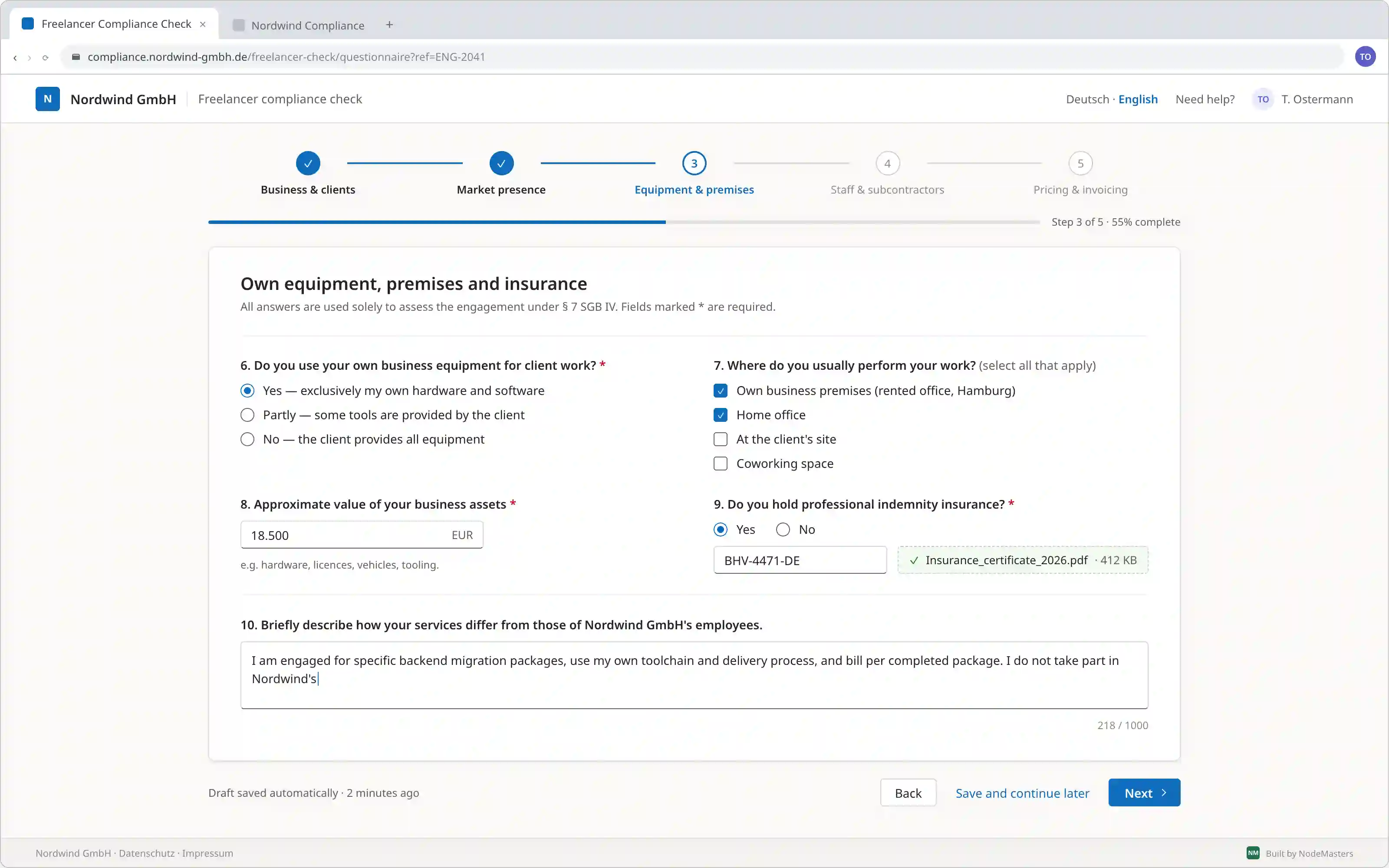
In Germany, any organisation engaging freelancers has to be confident the relationship is not false self-employment, or Scheinselbstständigkeit. The test is not what the contract says: it turns on how the work is actually carried out: how much direction is given, whose equipment is used, how many clients the freelancer has. It has to be assessed case by case, for every freelancer, before the engagement starts and for as long as it continues.
If a freelancer is later reclassified as an employee, the consequences fall almost entirely on the engaging company: social security contributions become payable retroactively, often going back several years. Payroll tax liability, employment-law claims and, in serious cases, criminal liability for the responsible managers can follow.
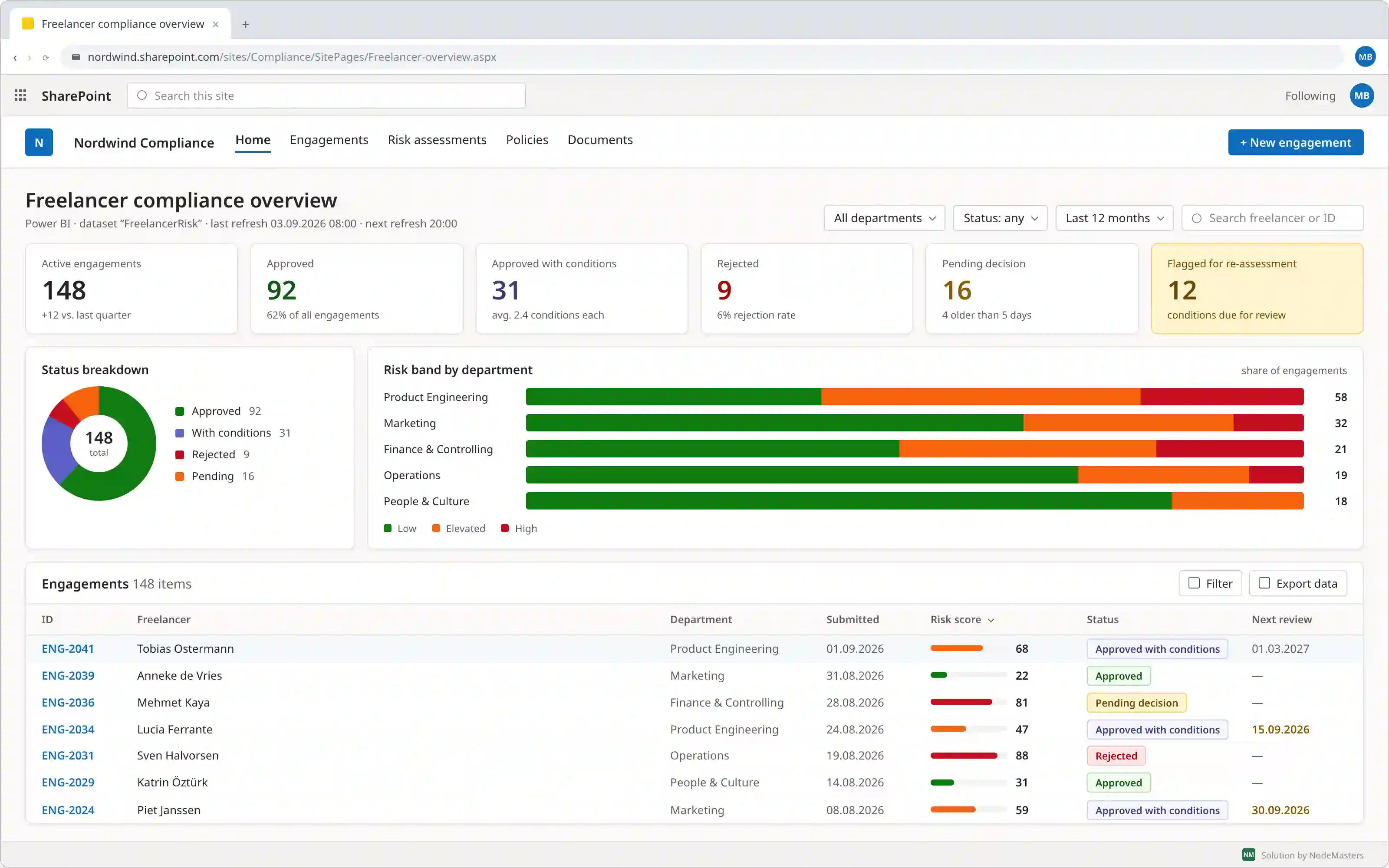
In most organisations, nobody owns this risk. Freelancers are engaged directly by the department that needs them, contracts are renewed year after year, and no one ever asks the questions that would reveal whether the relationship still looks like a service contract — or like a job. The pattern is almost always the same: the same freelancer working for years, performing core tasks rather than a clearly bounded project, sitting in the team, joining meetings, using a company laptop and taking instructions from a line manager — and nobody ever checked, because nobody was responsible for checking. These long-running, deeply embedded engagements carry the highest exposure, and they are the ones most likely to go unexamined.